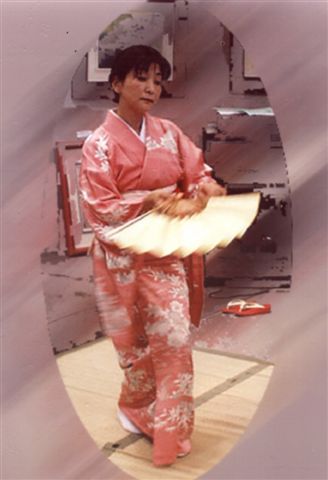
Traditional Japanese Dance "Black Hair"
This piece was composed in 1784, and is one of the most effective songs describing the intensity of a woman's yearning for lost love. The song layers quintessential images of loneliness that lead up to the cathartic ending in which the black hair, although unmentioned, is evoked to contrast poignantly with the white snow, a conventional metaphor for the white hair of old age. (written by John Solt)
White for solo piano (1983) by Shigenobu Nakamura (b.1950)
A member of the faculty at the Kyoto College of the Arts, Shigenobu Nakamura is a recipient of numerous awards such as the NHK Mainichi Music Competition and the Gaudeamus International Composition Competition. As the title suggests, this entire piece relies exclusively upon the white keys of the piano. The dynamics and rhythm are left largely to the performer's discretion. For a composition in which the music is unmeasured and each note value undetermined, the performer's sense of timing ( ma in Japanese) assumes an important role in breathing life into the music.
Hi No Chi (The Land of Sorrow) (1991) by Yoichi Togawa (b.1959)
Choreographed by Junko Tano
Hi No Chi is inspired by the series of paintings entitled Hi No Chi or The Land of Sorrow by Hiroshima Asada, a Western-style painter living in Kyoto. The composer, Yoichi Togawa writes, I did not intend to express Asada's paintings directly through music, but instead attempted to reveal the essence of my own spirit that has been shaped in part by these paintings….While I was composing my own version of Hi No Chi I was continually haunted by the memories of human grief that have been inherited over the centuries. These memories resemble a quiet cry of life beyond the common emotions of joy, anger, sorrow, and pleasure.
Junko Tano was born in Tokyo and began her training in Kabuki dance when she was three years old. She currently specializes in Ji-Uta Mai and has performed at many theaters around the world, which include the Kabuki Theater and the National Theater in Tokyo, as well as other theaters in the United States, Greece, and Italy. She travels throughout the United States offering Cultural Workshops for students, organizations, and families. She is also the Founder and Director of the Junko Tano School for Japanese Dance (1993), where she currently teaches. Her web site address is: www.japanesedance.com, for performance info e-mail: junkotano@aol.com.
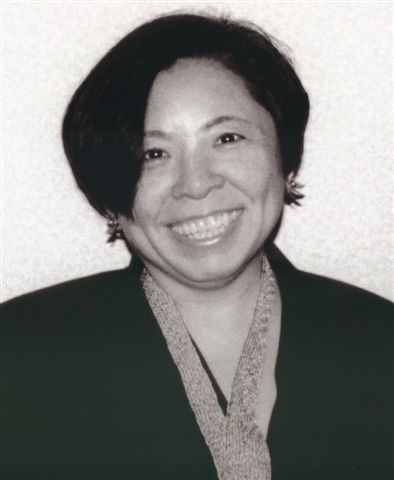
Chie Sato Roden began her formal piano study in Yokosuka, Japan, and continued her studies and received MFA at Rutgers University. For her enthusiastically reviewed Carnegie Recital Hall debut in September of 1981, NY Times critic Bernard Holland wrote, Roden played as if she cherished every note of this music. Since then, she has premiers more than 40 Japanese pieces to the audience in the US, UK, Canada, Italy, Russia, Norway, France and Japan. In 1998 Roden won a special prize in contemporary music by the IBLA International Competition. In addition to her solo performances, she has embarked duo-piano career with Salvatore Moltisanti in 1999. For information: chieroden@earthlink.net.